
Your firm must train its people. Can you prove it did?
Australian firms covered by AML/CTF must train their staff, and the e-conveyancing rules require cyber training for every PEXA and Sympli user. DefSafe trains your people in five-minute lessons and keeps the record.
- Written from the rules themselves
- Five-minute lessons
- No account needed to try

The penalties land on the firm
Regulators can fine, audit and suspend. Insurers can raise your excess. Training your people is part of every one of these duties.
-
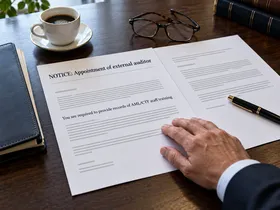
A$36.4m
Maximum civil penalty per contravention for a company under Australia's AML/CTF Act. A firm's AML/CTF program must provide for staff training.
AUSTRAC, October 2026
-
NZ$2m
Maximum civil penalty for a company that fails its AML/CFT programme duties in New Zealand. The programme must include staff training.
AML/CFT Act 2009, s 57 and s 90, October 2026
-

Suspended
A firm in material breach of the e-conveyancing Participation Rules can have its PEXA or Sympli access restricted, suspended or terminated. The rules require cyber training for every user.
NSW Registrar General, November 2025
-

2× excess
Victoria's solicitors' insurer doubles the excess on email-compromise claims where the email account had no multi-factor authentication.
LPLC, since 1 July 2023
DefSafe covers the training part of each duty and keeps the record. It does not replace a firm's own program, policies or advice.
What your people learn
3 courses, 9 lessons, five minutes each.
-

Payment redirection fraud
How a settlement gets redirected, the call-back before any payment, and what to do in the first hour after.
A$166.8m lost to payment redirection in Australia in 2025 (ACCC)
-
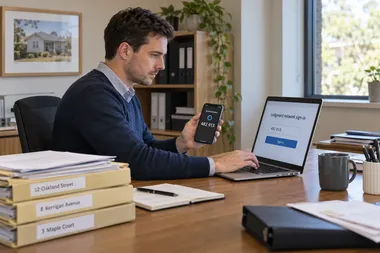
E-conveyancing cyber training
Secure use of the lodgment network, your own systems and email: the three topics the Participation Rules set for every PEXA and Sympli user.
Model Participation Rules version 7, rule 7.2.1
-

AML/CTF starter
Why your firm is now a reporting entity, knowing your customer, and the training records AUSTRAC and the DIA expect.
Both Australia and New Zealand require AML staff training

Built from the rules, around what people actually do
-
Written from the rules
Each lesson is built from the rule text and official guidance it covers, and checked against it before it is published.
-
Routines, not awareness
People learn the steps that stop the loss: the call-back before a payment, the identity check, the first hour after a redirection.
-
Proof when someone asks
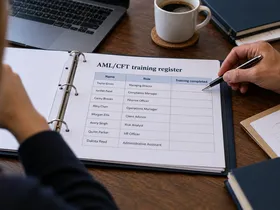
AUSTRAC and the DIA both expect a register of who was trained and when. Every lesson ends with questions, and every completion is recorded.
Sold through the organisations firms already rely on
Insurers, AML providers and professional bodies license DefSafe for every firm they serve, under their brand or ours.
-
Professional indemnity and cyber insurers
You pay for the redirected settlements. One licence trains every firm you cover.
-
AML software and consultancies
You write your clients' AML/CTF programs. Add the staff training those programs call for.
-
Professional bodies and networks
Law societies, conveyancing institutes, real estate and accounting networks: a programme your members finish in minutes.
Running a firm yourself? Tell us which one and we will tell you how to get it.
The same duty in other countries
The UK, Ireland, Canada and Singapore put similar AML training duties on the same professions. A partner there can ask us for its own version.
-
On request
United Kingdom
Solicitors, conveyancers, accountants and estate agents must make staff aware of the law and train them regularly, with a written record.
Money Laundering Regulations 2017, reg 24
-
On request
Ireland
Solicitors, accountants and property services must instruct staff on the law and give them ongoing training.
Criminal Justice Act 2010, s 54(6)
-
On request
Canada
Real estate brokers and accountants need a written, ongoing training program as part of their compliance program.
Proceeds of Crime (Money Laundering) and Terrorist Financing Act
-
On request
Singapore
Estate agents, law practices and accounting firms each carry AML/CFT duties under their own regulators.
CEA, Ministry of Law, ACRA
Before you ask
How do partners license DefSafe?
Does it replace a firm's own AML/CTF program?
Where does the content come from?
Is this legal advice?
How long does it take?
Can the lessons follow our own procedures?

See a lesson for yourself
It takes five minutes and no account. Then tell us which firms you serve.